
How to build a successful internal mobility strategy
Creating an internal mobility strategy is about more than just moving talent around. It’s about giving people the opportunity to expand their horizons, sharpen their skills, and work together in new ways. And here’s the twist: recognition is at the heart of it all. Ready to build a strategy that connects employee development with the success of the business? Here’s how to get started: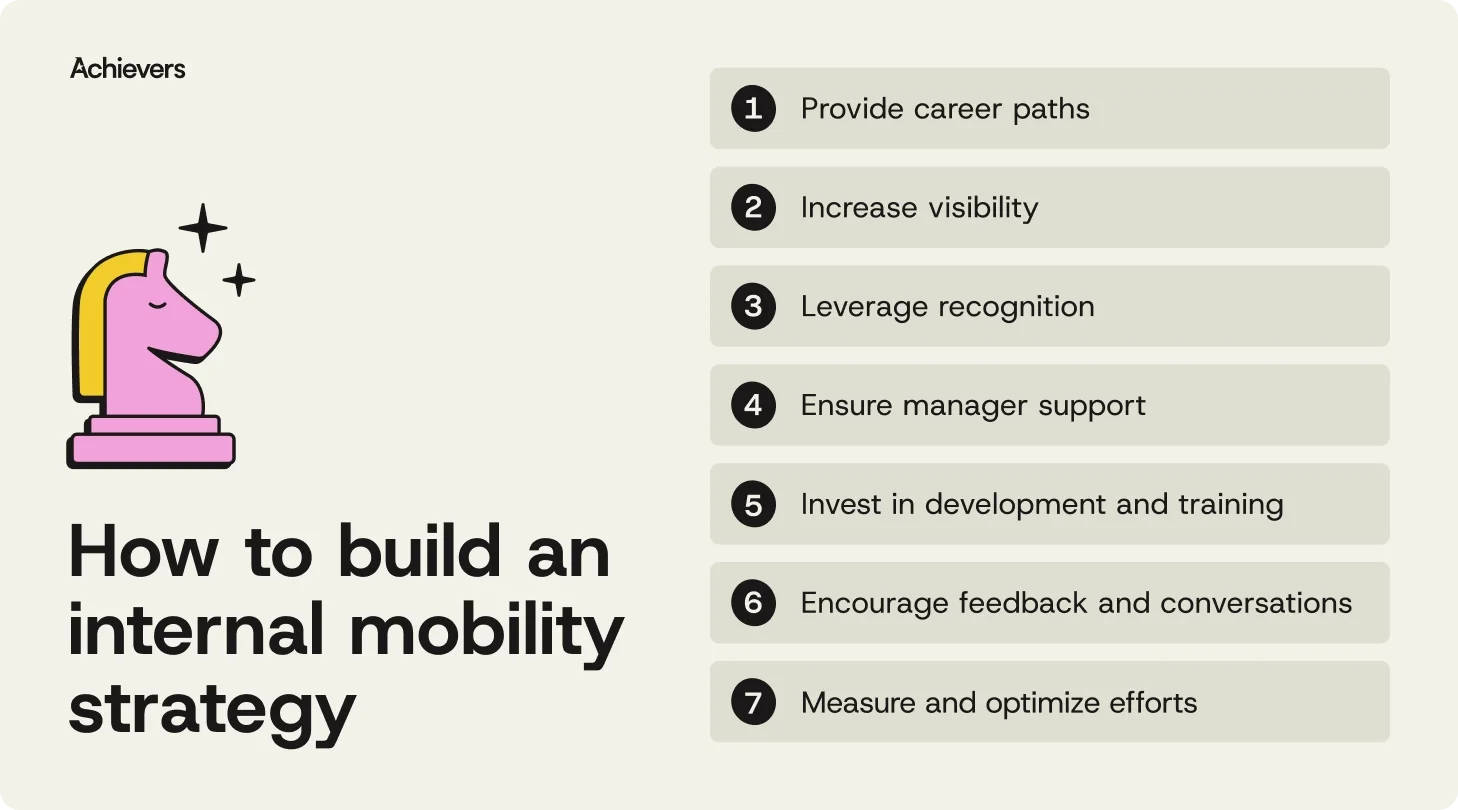
1. Provide career pathways
Clear career paths are like having a GPS for your career — they guide employees to where they want to go and show them the best route to get there. And when employees know where they’re headed, they’re more engaged and more likely to stay. Recognition platforms map out skills, track achievements, and highlight growth opportunities — giving employees the clarity they need to see their future and take control of their career journey.2. Increase visibility into internal opportunities
If your employees can’t see the opportunities, how can they seize them? Creating visibility for internal roles is key to making sure employees know what’s next. Recognition platforms offer real-time insights into performance and skill development, making it easier for managers to spot internal talent and open the door to new roles. It’s about helping employees find the next step in their career journey — right within the company.3. Leverage recognition to identify and promote talent
Recognition goes beyond praise — it helps identify the people making a real impact. A recognition platform helps managers track performance and behavior patterns, providing real insights into who’s ready to take their career to the next level. Whether it’s leadership, collaboration, or problem-solving, recognizing the right behaviors means you’re promoting people who are making a real impact, not just checking boxes.4. Ensure manager support
Managers are the lifeblood of internal mobility — they spot potential, guide career conversations, and help employees take the next step. With the right system in place, managers can easily track progress and feedback, making it easier for them to nurture their team’s growth. It’s all about giving them the tools they need to help employees move forward.5. Invest in skills development and training
According to Achievers’ State of Recognition Report, 65% of HR leaders tap into recognition data to fuel learning and development. When leaders celebrate key employee milestones — whether it’s finishing a course or tackling a new project — they’re showing that personal growth matters — and backing it with real recognition.6. Encourage feedback and open conversations
Internal mobility isn’t a set-it-and-forget-it strategy. Regular check-ins, employee feedback tools, and open conversations are key to keeping things on track. With integrated surveys and feedback in your recognition program, employees feel heard and supported, while managers gain valuable insights into their goals and engagement levels.7. Measure and optimize internal mobility efforts
Tracking metrics like mobility rates, engagement, and retention helps you figure out what’s working — and what’s not. By analyzing trends in recognition and career growth, managers can tweak their approach, optimize internal mobility, and make sure they’re always moving in the right direction.Why internal mobility matters for businesses
When employees can grow and evolve within your company, it’s a win for everyone. Internal mobility keeps top talent engaged, reduces turnover, and drives the success of your business. Here’s why it should be at the heart of your talent strategy — and how Achievers’ can help you unlock the full potential of your workforce:- Improves retention and reduces turnover: Internal mobility keeps your talent engaged and loyal, so you’re not always scrambling to hire from the outside. With Achievers’ real-time reporting, you can spot top performers and promote from within.
- Fosters skill development: Internal mobility helps employees build the skills they need as your company evolves. Achievers tracks progress, identifies growth opportunities, and celebrates learning, empowering employees to grow while working toward company goals.
- Increases employee engagement: Giving employees new roles or projects keeps them motivated. Achievers helps you celebrate milestones, encourage meaningful feedback, and build a growth-driven culture that sparks productivity and keeps employees fully engaged.
- Access to a ready talent pool: Internal mobility helps businesses fill roles faster with qualified candidates. Achievers makes it simple to spot top talent and track performance, so you can easily identify who’s ready for the next step — no need to look outside when the talent is already inside.
How Achievers supports internal mobility
At Achievers, we believe growth and opportunity should be at the heart of every company’s culture. Our science-backed platform takes a smarter approach to internal mobility — driving 5x the impact on key business drivers. We help employers invest in their talent and empower employees to reach their full potential. Here’s how we turn internal mobility into a business success story:1. Recognizes skill development
Tracking growth and skill development? Easier than ever. With near real-time data, Achievers gives managers the tools to celebrate milestones and stay ahead of the curve. Our recognition and rewards data ensures employees feel seen, valued, and motivated to keep pushing forward. Because when people feel appreciated, growth follows.2. Aligns skills with opportunities
AWI’s Skills Gap Report tells us that half of HR leaders struggle to pinpoint employees with the right skills, but Achievers makes this a whole lot easier. With cutting-edge recognition data and business intelligence (BI) insights, we help organizations track trends, set benchmarks, and match employees with the right opportunities — ensuring you’re always one step ahead in developing your internal talent.3. Encourages internal mobility through rewards
Internal mobility is a lot more exciting when there’s something to work toward. With our points-based rewards platform, employees earn rewards for career milestones that they can redeem for what really matters to them. These incentives keep them motivated, engaged, and ready for that next step — because who doesn’t love a good reward for a job well done?Internal mobility FAQs
- n t
- Promotions: Advancing to a higher role with more responsibility and pay, offering a clear path forward. n t
- Lateral moves: Shifting to a different role at the same level to gain new skills and work across teams. n t
- Project-based or temporary assignments: Taking on short-term projects to gain experience, learn new skills, and expand networks. n t
- Role expansions: Adding new responsibilities within the current role to keep work engaging and support growth. n
There are a range of benefits to internal mobility, including but not limited to:
n- n
- Filling skills gaps n
- Improving productivity n
- Boosting engagement n
- Fostering innovation n
- Encouraging knowledge-sharing n
- Reducing hiring costs n
Internal mobility helps your people grow — and makes your company stronger in the process.
nTo calculate your organization’s internal mobility rate, use this formula:
n(Total number of internal movements ÷ Total number of employees) x 100 = Mobility rate (%).
nA good internal mobility rate typically falls between 10% and 20%. This means that each year, 10% to 20% of roles within the company are filled through transfers, promotions, or lateral moves.
nCompanies can take these steps to increase internal mobility:
n- n
- Create clear career pathways n
- Align employee skills with available roles n
- Offer mentorship and skill-building opportunities n
- Use recognition tools to spot and celebrate high-potential employees n
- Build a growth-focused culture with ongoing feedback and development conversations n
By making growth a priority and recognizing employees’ potential, you create a culture where everyone feels like they’re moving forward.
nInternal mobility is all about moving employees into new roles within the company, promoting growth, and keeping turnover in check. External mobility? That’s when you bring in fresh faces to fill gaps and inject new ideas into the organization. Both are important, but internal mobility helps you make the most of the talent already in-house.
n


